Goal 4: Prescription Drugs
To reduce poisonings and deaths due to over-the-counter and prescription drug misuse and abuse by youth and adults in Gratiot County.
Prescription Drug Objectives
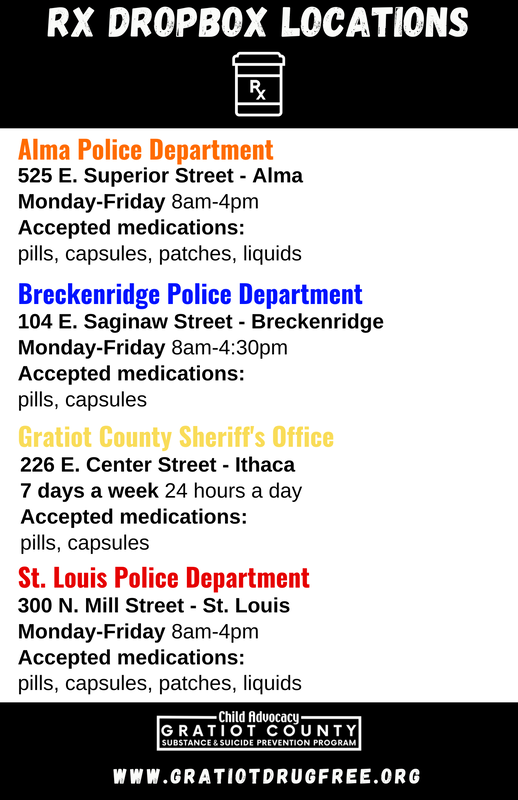
4.1 Social Availability: To reduce youth and adult social access to over-the-counter and prescription drugs
4.2 Promotion: To impact the promotion, prescribing, and distribution practices of over-the-counter and prescription drugs
4.3 Community Norms: To correct the misperceived community norms related to over-the-counter and prescription drug misuse and abuse
4.4 Laws and Policies: To support and/or enhance laws and policies that reduce over-the-counter and prescription drug misuse and abuse
4.1 Social Availability: To reduce youth and adult social access to over-the-counter and prescription drugs
4.2 Promotion: To impact the promotion, prescribing, and distribution practices of over-the-counter and prescription drugs
4.3 Community Norms: To correct the misperceived community norms related to over-the-counter and prescription drug misuse and abuse
4.4 Laws and Policies: To support and/or enhance laws and policies that reduce over-the-counter and prescription drug misuse and abuse
Prescription Drug Abuse Rates
The data surrounding adult abuse of OTC and prescription drugs and the youth data that follows provides further insight into this legitimate public health issue. Between 2002 and 2004, an estimated 534,000 people in Michigan reported non-medical use of any prescription drug in the past year. The Michigan Treatment Episode Data Set (TEDS) shows a 182% increase (1,929 to 5,442) from 2002 to 2007 in the number of admissions into Michigan’s publicly funded substance use disorder treatment system for people reporting prescription drug abuse as a problem at the time of admission. These indicators speak to an increasing problem in Michigan and show prescription drug abuse is already having an adverse and direct impact on our established community service systems and their limited resources.
At 12%, Michigan has one of the highest rates of teen prescription drug abuse in the United States, as teens turn away from street drugs and use prescription drugs to get high. Within the Mid-South region, 3.4% of 8th graders, 9% of 10th graders, and 15.9% of 12th graders, reported using prescription drugs (such as amphetamines, barbiturates, tranquilizers, Oxycontin, Vicodin) illegally in their lifetime.2 Regarding OTC drug abuse, 7% of 8th graders, 13.5% of 10th graders, and 18.3% of 12th graders in the Mid-South region reported using OTC drugs inappropriately in their lifetime.
On a county level, 2% of 8th graders, 7.9% of 10th graders and 11.9% of 12th graders reported using Prescription drugs inappropriately in their lifetime.2 The number of students reporting misuse of OTC drugs in their lifetime is 5.9%, 10.9% and 12.9% for 8th, 10th and 12th grades respectively.2 While Gratiot’s numbers are lower than that of the Mid-South region, the increasing number of youth inappropriately using prescription and OTC drugs is cause for concern. By 12th grade, Gratiot’s rates are similar to the rate of prescription drugs abuse by teens in the State.
Focus groups conducted in 2008 suggest that the number of students abusing prescription and OTC drugs in the county may be even higher than those found on the PNA in 2008. A survey given to 138 12th and 9th grade students during focus groups indicates that 26% of the students surveyed admitted to taking a prescription drug without being prescribed medication.6 Among those surveyed, Vicodin was the drug that was most often reported as the drug that was taken without a prescription. 16.7% of the students surveyed had taken a Vicodin that had not been prescribed to them.
At 12%, Michigan has one of the highest rates of teen prescription drug abuse in the United States, as teens turn away from street drugs and use prescription drugs to get high. Within the Mid-South region, 3.4% of 8th graders, 9% of 10th graders, and 15.9% of 12th graders, reported using prescription drugs (such as amphetamines, barbiturates, tranquilizers, Oxycontin, Vicodin) illegally in their lifetime.2 Regarding OTC drug abuse, 7% of 8th graders, 13.5% of 10th graders, and 18.3% of 12th graders in the Mid-South region reported using OTC drugs inappropriately in their lifetime.
On a county level, 2% of 8th graders, 7.9% of 10th graders and 11.9% of 12th graders reported using Prescription drugs inappropriately in their lifetime.2 The number of students reporting misuse of OTC drugs in their lifetime is 5.9%, 10.9% and 12.9% for 8th, 10th and 12th grades respectively.2 While Gratiot’s numbers are lower than that of the Mid-South region, the increasing number of youth inappropriately using prescription and OTC drugs is cause for concern. By 12th grade, Gratiot’s rates are similar to the rate of prescription drugs abuse by teens in the State.
Focus groups conducted in 2008 suggest that the number of students abusing prescription and OTC drugs in the county may be even higher than those found on the PNA in 2008. A survey given to 138 12th and 9th grade students during focus groups indicates that 26% of the students surveyed admitted to taking a prescription drug without being prescribed medication.6 Among those surveyed, Vicodin was the drug that was most often reported as the drug that was taken without a prescription. 16.7% of the students surveyed had taken a Vicodin that had not been prescribed to them.
Risk and Protective Factors
Several risk factors were uncovered in the review of the national data around OTC and prescription drug abuse. The most striking risk factor states that 40% of teens surveyed in grades 7 through 12 think that prescription medicines are much safer to abuse than illicit drugs, even if they are not prescribed by a doctor. The same study reported that nearly one-third of teens believe there’s “nothing wrong” with using prescription medicines without a prescription once in a while. Regarding youth and adult access and availability to OTC and prescription drugs, the data is quite conclusive and points directly to friends and family. The 2006 National Survey on Drug Use and Health reported that 70% of people who abuse prescription pain relievers say they obtain them from friends or relatives. In addition, about two-thirds (64%) of teenagers who have abused prescription stimulants report getting, buying, or stealing them from friends or relatives.
When 9th and 12th grade Gratiot County youth - who had taken medications not prescribed to them - were asked where they obtained the drugs from, the most common answers were “from a friend”, “from home when their parents did not know” and “from a parent”. Among 9th graders, 30% indicated it would be from a friend, 27% indicated they would take it from home without a parent knowing, and 12% indicated that a parent would give it to them. Among 12th graders who have abused prescriptions 25% indicated that they would most likely get it from a friend, 25% indicated they would from a dealer, and 25% indicated that they would most likely get it from home without a parent knowing.
Community Anti-Drug Coalitions of America (CADCA) estimates that of the more than four billion prescriptions written annually in the United States, up to 40 percent of drugs dispensed outside of hospitals aren't taken, generating some 200 million pounds of unused pharmaceuticals each year. Unused patient medications are a contributor to accidental poisonings, which have involved an 80 percent increase in U.S. deaths from accidental overdose of narcotics in a recent six-year period. Efforts will be made by GCSAC throughout this strategic plan to gather more local data on the misuse and abuse of prescription / OTC drugs, to educate the community on this misuse, and to impact the social availability of prescription and over-the-counter drugs to the youth, adult, and elderly population throughout Gratiot County.
When 9th and 12th grade Gratiot County youth - who had taken medications not prescribed to them - were asked where they obtained the drugs from, the most common answers were “from a friend”, “from home when their parents did not know” and “from a parent”. Among 9th graders, 30% indicated it would be from a friend, 27% indicated they would take it from home without a parent knowing, and 12% indicated that a parent would give it to them. Among 12th graders who have abused prescriptions 25% indicated that they would most likely get it from a friend, 25% indicated they would from a dealer, and 25% indicated that they would most likely get it from home without a parent knowing.
Community Anti-Drug Coalitions of America (CADCA) estimates that of the more than four billion prescriptions written annually in the United States, up to 40 percent of drugs dispensed outside of hospitals aren't taken, generating some 200 million pounds of unused pharmaceuticals each year. Unused patient medications are a contributor to accidental poisonings, which have involved an 80 percent increase in U.S. deaths from accidental overdose of narcotics in a recent six-year period. Efforts will be made by GCSAC throughout this strategic plan to gather more local data on the misuse and abuse of prescription / OTC drugs, to educate the community on this misuse, and to impact the social availability of prescription and over-the-counter drugs to the youth, adult, and elderly population throughout Gratiot County.